The current sustainability landscape in the Gulf countries invites a fresh perspective on the role of environmental services. For a long time, sustainability has been viewed mainly through the lens of climatology and emission assessments—using more or less sophisticated methodologies. This inertia is not accidental; it reflects the long-standing political influence of the United States in shaping global green transition practices. The Paris Agreement of 2015 has remained a key political driver of low-carbon processes in the global economy for nearly a decade.
Yet, recent developments—including the abrupt shift in U.S. climate policy, the COVID-19 pandemic, oil market price wars, and the war in Ukraine—have led regional communities to rethink the very concept of sustainability.
Today, MENA countries are placing greater emphasis on local indicators of sustainable development. Beyond the climate agenda, food security and, to some extent, energy security have become central concerns. Net-zero ambitions in the region could be significantly optimised by shifting energy-intensive processes—such as water desalination and air conditioning during peak heat—towards renewable energy sources.
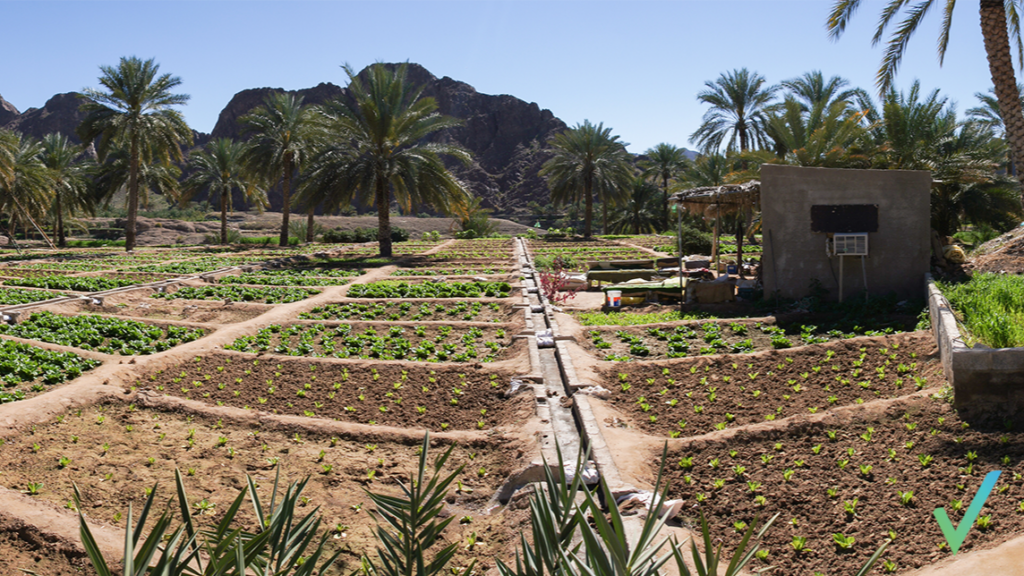
Indicators reflecting the condition of specific territories where economic activity takes place are gaining increasing importance. Emission metrics alone fail to capture critical dimensions such as soil fertility, biodiversity, desertification, and forestation potential. For desert-dominated countries, these parameters are directly linked to their ability to achieve food self-sufficiency by 2050. Even in Oman, the current regional leader, domestic food production meets only about 50% of demand.
This shows that global emission-based metrics, which dominate today’s sustainability assessments, do not adequately reflect realities on the ground—particularly in oil-producing regions, where soil health and toxicity must be addressed.
Since 2024, the MENA region has been shaping its own sustainability agenda, actively developing national carbon markets. Soon, however, regulators will face the challenge of integrating additional sustainability indicators that are not yet tied to monetisation mechanisms, unlike carbon credits.
In our work on land remediation and restoration, we apply best practices in post-treatment site assessment. Our focus extends beyond reducing greenhouse gas emissions to ensuring soil health, long-term usability, and the capacity to support regional food security. We also prioritize water efficiency and comprehensive sustainability analysis, guided by the principle that sustainability must be addressed in an integrated way.
Arva Greentech Remediation AG is among the few companies in the environmental services sector that view responsibility for sustainability not as the sole obligation of resource operators but as one shared by service providers as well. This perspective reinforces the importance of integrating multiple sustainability indicators and assessing them systematically in critical processes such as soil restoration.
We believe this forward-looking approach will become increasingly relevant across the oil and gas value chain as the industry advances toward the global net-zero target.
Author: Volodymyr Harkavenko, Sustainability Division Manager